
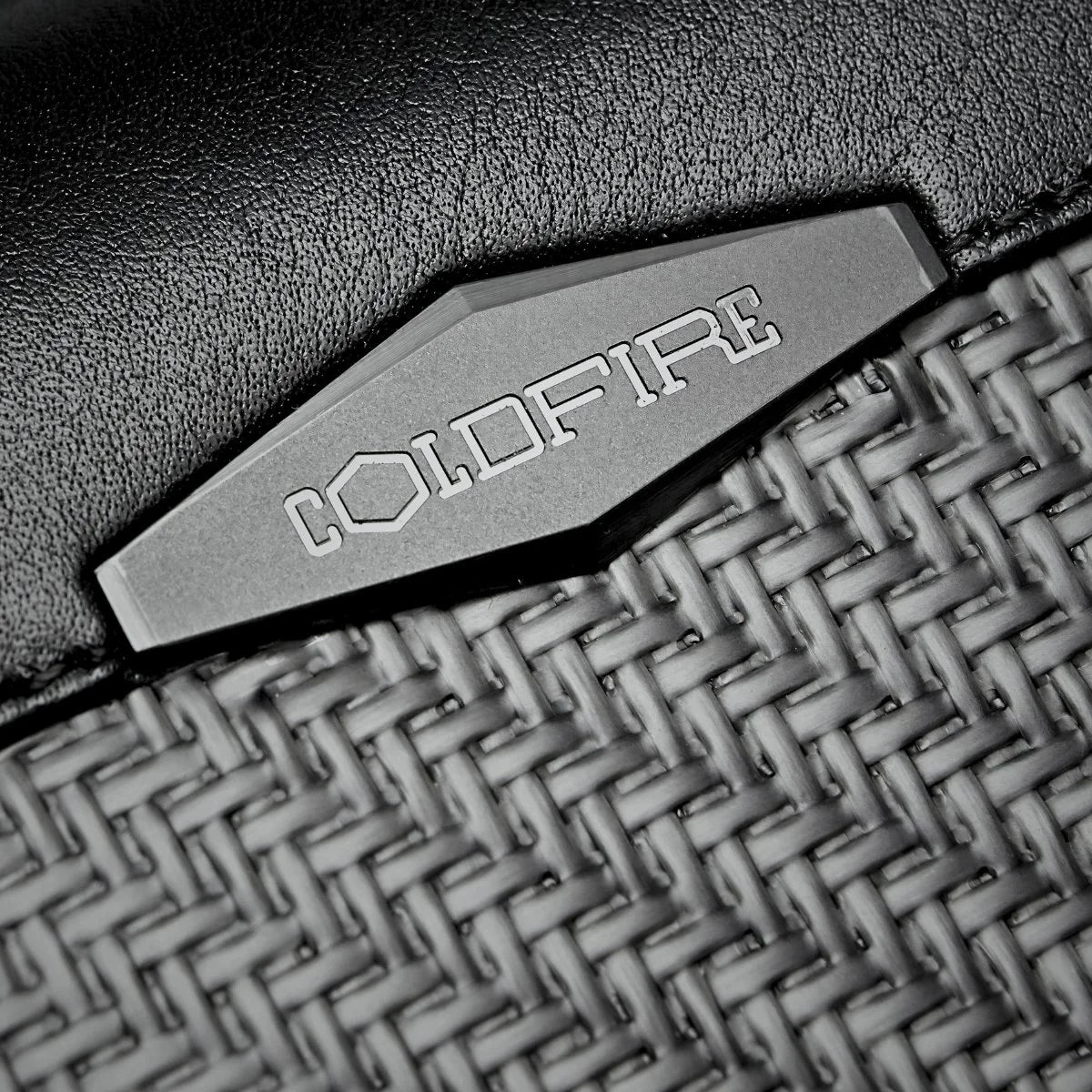
Ask an engineer what the strongest wallet material is and the first thing you get back is a question: strongest against what? Titanium wins on crush and corrosion. Carbon fiber wins on stiffness per gram. Dyneema wins on tensile strength per gram. Kangaroo leather wins among leathers by a wide margin. None of them wins everything, and the loads inside a wallet are so small that the number on a datasheet is rarely the number that matters. This guide puts the real figures side by side, explains which kind of strength a wallet actually needs, and shows why the best wallets are built from a combination rather than a single hero material.

The short answer
By raw tensile strength, the materials used in wallets rank roughly like this: carbon fiber composite and Dyneema fibre at the top, Grade 5 titanium next, then stainless steel, then aluminium, then nylon and polyester fabric, and finally leather, with kangaroo well above cowhide. By strength for its weight, carbon fiber and Dyneema lead again, titanium beats steel, and aluminium is middling. But a wallet does not fail by being pulled apart. It fails by stretching, abrading, tearing at a stitch hole, cracking at a fold, or having its elastic band go slack. Judged by those failure modes, the strongest wallet is one where each material is used for the job it is best at: a composite or kangaroo shell that will not stretch, titanium where metal meets daily handling, and a high-tenacity fabric where cards and bills slide thousands of times a year.
The numbers, side by side
Typical published values for the materials wallets are actually made from. Composites and fabrics are quoted for the fibre direction, which is how they are loaded in a wallet. Leather values vary with tannage and cut; the ranges here are for the full-grain layer.
| Material | Tensile strength | Density | Stretch under load | Where it is strong | Where it is weak |
|---|---|---|---|---|---|
| Carbon fiber composite (rigid, epoxy matrix) | 600 to 1,500 MPa, woven to unidirectional | 1.5 to 1.6 g/cm³ | Almost none | Stiffness, stiffness per gram, zero creep | Brittle at edges and corners; cannot fold |
| Flexible carbon fiber (Carbitex OmniFlex CX6) | Same carbon fibres, flexible laminate instead of epoxy | About 1.5 g/cm³ | Almost none in the fibre direction | Folds like fabric, does not stretch, rated beyond 10,000 flex cycles | Surface laminate can mark under years of overloading |
| Dyneema (UHMWPE) fibre | 3,000 to 3,500 MPa | 0.97 g/cm³ (floats) | Very low | Highest strength per gram of any common fibre; abrasion; cut resistance | Low melting point; slippery to stitch; only a lining or thread, not a shell |
| Titanium Grade 5 (Ti-6Al-4V) | About 900 to 950 MPa | 4.43 g/cm³ | None | Crush, corrosion, scratch resistance when DLC-coated; about 45% lighter than steel at similar strength | Rigid; expensive to machine; cold in a pocket as a whole wallet |
| Stainless steel 304 | About 500 to 700 MPa | 8.0 g/cm³ | None | Cheap strength | Heavy; the reason few good wallets use it except as money clips |
| Aluminium 6061-T6 | About 310 MPa | 2.70 g/cm³ | None | Light, easy to machine, anodises well | Dents and scratches easily; anodising wears at the corners |
| Nylon 6.6 fabric | Fibre 600 to 900 MPa; fabric strength depends on weave | 1.14 g/cm³ | Moderate | Abrasion and tear in ripstop weaves | Frays at cut edges unless laser-cut or bound |
| Kangaroo leather | Roughly ten times cowhide at equal thickness (CSIRO-era figure; independent maker tests found about four times) | About 0.9 to 1.0 g/cm³ | Low for a leather | Strongest leather per millimetre; keeps strength when split thin | Still a leather: solvents, soaking |
| Full-grain cowhide | About 15 to 30 MPa | About 0.9 to 1.0 g/cm³ | Noticeable; slots widen under card pressure | Ages gracefully, repairable, familiar hand | Stretch; loses most of its strength when split thin |
Two things stand out. First, every engineered material in the table is twenty to a hundred times stronger than leather in pure tension, and none of that matters, because no card has ever pulled a wallet apart. Second, the materials that are strongest on paper (rigid carbon plate, steel) make poor whole wallets, because a wallet has to fold, sit against a body and be handled ten times a day.
What "strong" means inside a wallet
Five kinds of strength matter in daily carry, and they rank the materials differently.
1. Resistance to stretch
This is the one that kills most wallets. Cards press outward on a slot several thousand times a year, and a material that elongates even slightly under that load ends up with loose slots and a sagging fold. Carbon fiber, in either rigid or flexible form, essentially does not elongate in the fibre direction. Kangaroo leather resists stretch far better than cowhide because its collagen fibres run parallel to the surface instead of crossing it, which is set out with sources in Kangaroo Leather vs Cowhide. Cowhide, especially top-grain and split, stretches, and that is the usual reason a leather wallet looks tired after two years.
Winner: carbon fiber, then kangaroo leather.
2. Resistance to abrasion
Card edges, coins and pocket fabric abrade a wallet from inside and out. Dyneema ripstop is exceptionally abrasion resistant for its weight, which is why it lines the bill compartment in our carbon fiber wallets; the comparison with nylon, cotton and leather linings is in Wallet Linings Compared. DLC-coated titanium barely scratches. Anodised aluminium looks tough but the coloured layer is microns thick and wears through at the corners first. Full-grain leather scuffs and then patinas; split leather scuffs and then cracks.
Winner: Dyneema for fabric, DLC-coated titanium for metal, full-grain leather for leather.
3. Resistance to tear at stitch holes
A stitch hole is a stress concentration, and leather tears from stitch holes long before it fails anywhere else. Kangaroo leather holds its tear strength when split thin, which is the reason it is used in motorcycle racing suits and the reason it can be used at wallet thickness without a backing. Carbon fiber laminates can be stitched but need care at the hole; fabric linings need bound or laser-sealed edges. This is also where thread matters as much as the shell: a bonded polyamide thread such as AMANN Strongbond resists the abrasion that opens seams.
Winner: kangaroo leather among natural materials, and the thread choice regardless of shell.
4. Resistance to fold fatigue
A bifold is folded and unfolded tens of thousands of times over its life. Rigid carbon fiber cannot be folded at all; it cracks. Metal plate wallets avoid the problem by not folding, and move the fatigue into an elastic band that goes slack in one to three years. Flexible carbon fiber is designed for exactly this: Carbitex rates OmniFlex at more than 10,000 flex cycles without deformation. Leather folds happily but creases and, in cheaper grades, cracks along the crease.
Winner: flexible carbon fiber, then full-grain and kangaroo leather.
5. Resistance to crush and the environment
Sat on, dropped, rained on, left in a hot car. Titanium is indifferent to all of it and does not corrode in sweat the way steel hardware eventually does, which is why we use Grade 5 for the logo plate and hardware rather than plated brass or steel. Carbon fiber shrugs off crush loads a leather wallet would feel. Leather dislikes soaking and heat cycling. Aluminium dents.
Winner: titanium, then carbon fiber.

Rigid vs flexible carbon fiber: same fibre, different material
Both start from the same woven carbon cloth. In a rigid plate the cloth is saturated with epoxy and cured, which locks the fibres into a stiff, glossy panel: superb in stiffness, useless for folding, and prone to chipping at machined edges. In a flexible composite the same cloth is bonded under pressure to a thin, tough laminate instead of being flooded with resin. The fibres still do not stretch, but the sheet bends like a heavy fabric. Depending on the laminate specified it can be matte or glossy; we specify matte because the weave can be felt under a fingertip, which is one of the easiest ways to tell real carbon cloth from printed imitation. The full comparison, including what each one means for a wallet, is in Flexible vs Traditional Carbon Fiber Wallets, and the case against metal plates is in Metal and Aluminum Wallets vs Flexible Carbon Fiber.
Is a titanium wallet stronger than a carbon fiber wallet?
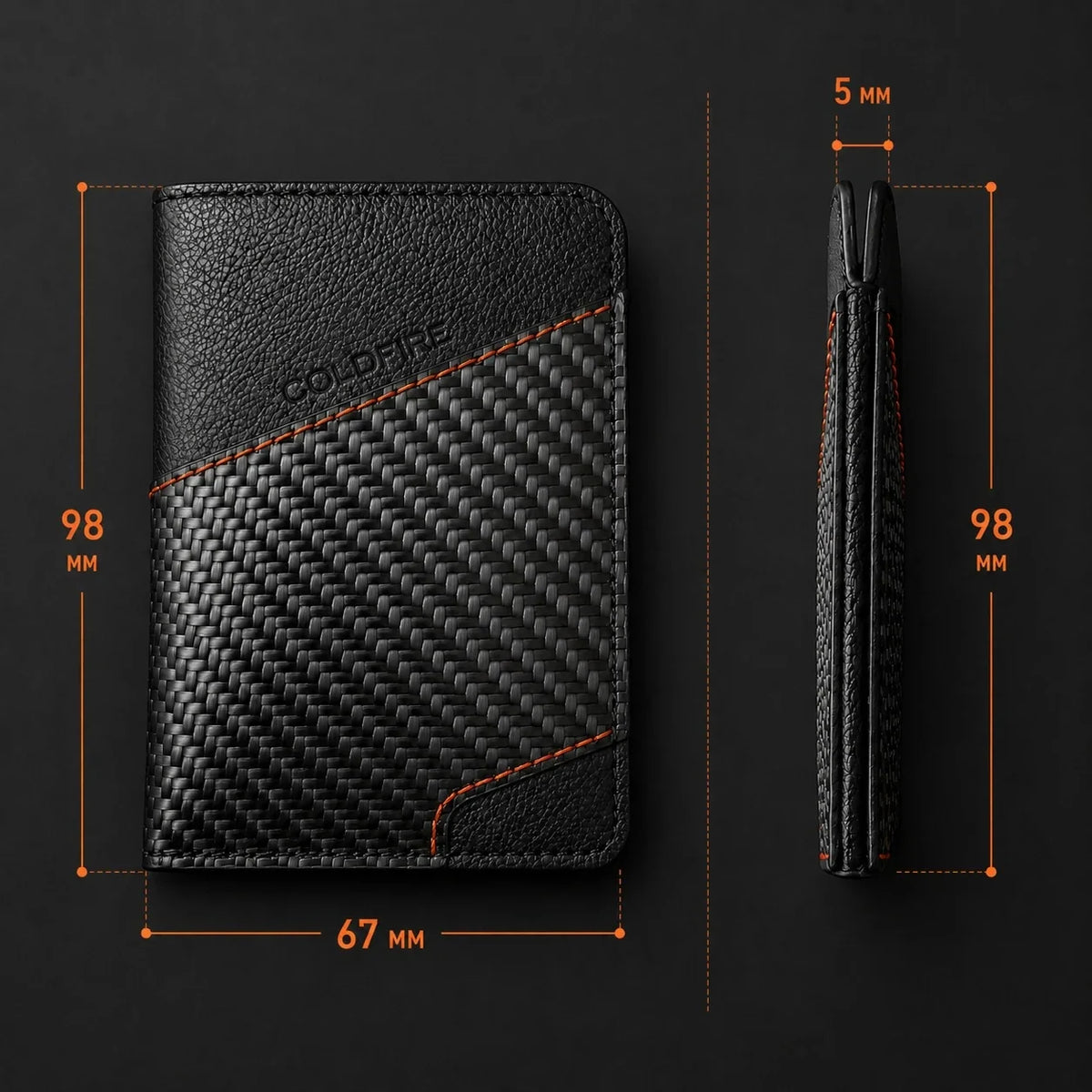
As a block of material, titanium is harder to dent and far more tolerant of abuse at an edge. As a wallet, a titanium plate wallet and a rigid carbon plate wallet share the same weak point: the elastic band or spring clip that actually holds the cards, which is neither titanium nor carbon. In a folding wallet titanium is best used where metal is needed at all, as hardware, a logo plate or a key ring, and carbon fiber is best used as the shell, because it is the only material that is both stretch-proof and foldable. That is the division of labour in every GT Rebel wallet: a Grade 5 Ti-6Al-4V plate and hardware on a flexible carbon fiber body. The exception is the Blade line, which is a kangaroo leather wallet with a decorative carbon strip across the body and no titanium at all, and the Scout One sleeve, which uses the carbon spine and kangaroo skin without metal.
Why the strongest wallet is a combination
No single material scores first in all five tests, so a wallet built from one material is strong in one way and weak in the others. The way we resolve it, with the reasoning:
- Shell: flexible carbon fiber (Carbitex OmniFlex CX6). Wins stretch and fold fatigue, which are the two things that end most wallets.
- Leather: K-Leather kangaroo (Packer Leather, Australia). Strongest leather per millimetre, so the interior can be thin without the slots growing.
- Hardware: Grade 5 titanium, DLC-coated. Wins crush, corrosion and scratch, used only where metal is needed.
- Bill compartment lining: Dyneema ripstop, laser-cut. Wins abrasion per gram, on the surface that bills slide across every day. Card compartments are lined in polyester.
- Thread: AMANN Strongbond bonded polyamide. Because the strongest shell still fails at a weak seam.
The result weighs 42 to 74 grams depending on the model, which is lighter than most cowhide bifolds, and it is covered by a five-year structural guarantee against stretching and loss of shape within the stated capacity. Strength on a datasheet is cheap. Strength that can be guaranteed for five years is the test.
- Strongest against stretch
- Carbon fiber (rigid or flexible), then kangaroo leather
- Strongest against abrasion
- Dyneema fabric; DLC-coated titanium; full-grain leather
- Strongest against tear at stitching
- Kangaroo leather, with bonded polyamide thread
- Strongest against fold fatigue
- Flexible carbon fiber (10,000+ cycles), then full-grain leather
- Strongest against crush and corrosion
- Titanium Grade 5 (Ti-6Al-4V)
- Weakest in daily carry
- Bonded and split leather; the elastic band on any plate wallet
Every material above is listed with its supplier and grade on the Engineering and Quality page. If you want to know how long each one lasts rather than how strong it is, read How Long Does a Wallet Last; the two rankings are not the same.
Strength questions, answered
What is the strongest material for a wallet?
In pure tensile strength, carbon fiber composite and Dyneema fibre, followed by Grade 5 titanium. In the way wallets actually fail, there is no single winner: carbon fiber is strongest against stretch and fold fatigue, titanium against crush and corrosion, Dyneema against abrasion, and kangaroo leather is the strongest leather. The strongest wallet uses each where it is best.
Is titanium stronger than carbon fiber?
Per gram, no: carbon fiber composite has roughly twice the tensile strength of Ti-6Al-4V at a third of the density. Per piece, titanium is tougher at edges and under impact, because carbon fiber composites are brittle where a laminate is cut or struck. In a wallet that makes titanium the right choice for hardware and carbon fiber the right choice for the body.
Does Grade 5 titanium matter in a wallet, or is it marketing?
It matters in a specific, modest way. Grade 5 (Ti-6Al-4V) is about 45% lighter than steel at comparable strength and does not corrode in contact with sweat, so a titanium plate or ring looks and works the same after years of handling where plated brass or steel would pit and wear. It does not make the wallet itself stronger; the shell does that. If a brand lists titanium as the headline strength of a leather wallet, ask what the leather and lining are.
Is kangaroo leather really stronger than cowhide?
At equal thickness, yes. The CSIRO-era figure quoted in Australia is roughly ten times the tensile strength of cowhide; independent maker tests found about four times, and Stephens (1987) documented that kangaroo keeps far more of its strength when split thin. In a wallet this shows as card slots that stay the width they were cut at. The sources and the limits of the comparison are in Kangaroo Leather vs Cowhide.
Is a carbon fiber wallet stronger than a leather wallet?
Against stretch, crush and fold fatigue, yes, by a wide margin. A rigid carbon plate wallet is strong but cannot fold and depends on an elastic band. A flexible carbon fiber wallet folds like leather and still does not stretch, which is why we build on it. Leather wins only on repairability and on ageing gracefully, which is a real advantage, just not a strength one.
What is the most durable wallet material for everyday carry?
For a folding wallet carried daily, a flexible carbon fiber shell with a kangaroo leather interior, titanium hardware and a ripstop lining is the most durable combination we know of, and it is the one we guarantee for five years. Among single materials, full-grain cowhide remains the honest traditional choice, provided the wallet is kept within its card capacity.
Written by Todor Georgiev, founder of COLDFIRE and a leather goods manufacturer in Plovdiv since 2000. Published 2 November 2026. Material values are typical published figures for the grades named (ASM and supplier data for metals, manufacturer data for Carbitex and Dyneema, tannery and CSIRO-era data for leathers) and are given for orientation, not as a specification of any product.

Share:
Leather Belt Care and Repair: How to Punch a Hole, Clean, Condition, Soften and Shorten a Belt
Passport Holder vs Travel Wallet: Which One to Carry, and Does It Need RFID?